Part 1 looked at owning a home or renting; working or staying home; smoking or not smoking; getting drunk or drinking with care, and driving fast or driving carefully. Part 2 now looks at fighting a war or despising war; using violence or living with love; your own religion or all religions – or none, and maybe a few other things which upset me.
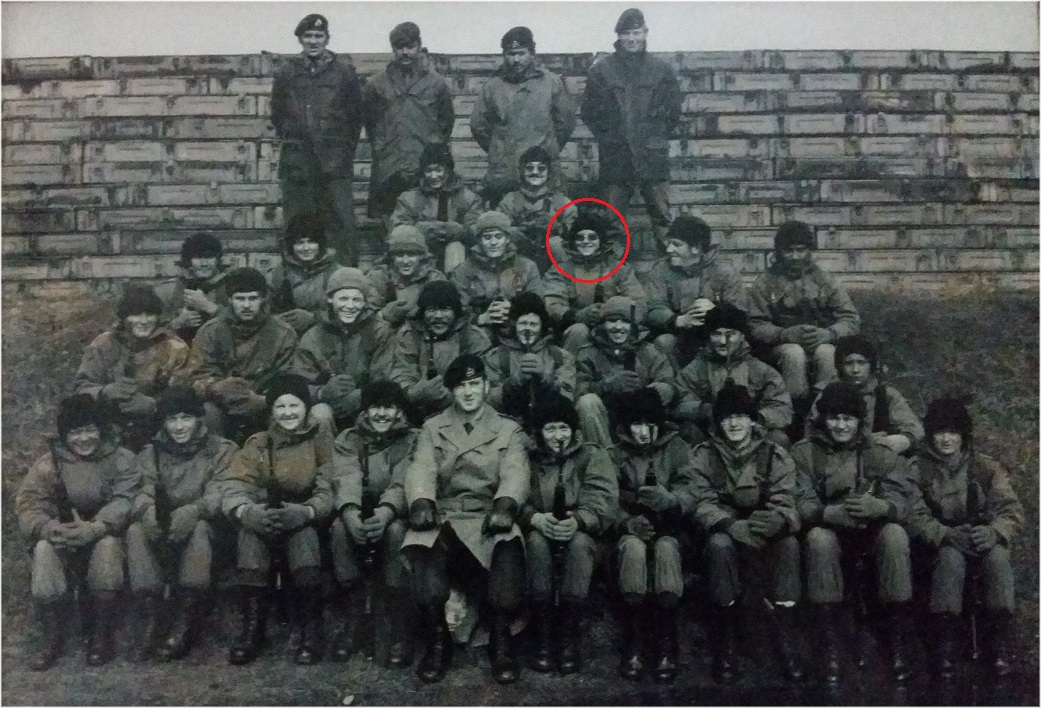
Way back then – 1977 – women were not allowed to use SLR rifles or grenades, but we had to fight fires set by the RNZAC (tankies) practicing out in the field. (We had to ride to a fire in M113 armoured personnel carriers – not the best transport.) Women were not allowed to do training in Fiji (no female toilets) or Singapore, although if we wanted to go there we could buy very cheap tickets over, as long as we bought full price tickets back. We weren’t included in overseas war – Vietnam had finished in 1975 and the Gulf War didn’t start until 1990 – but we had what, at the late 1970s and early 1980s, seemed to be a good life.
I think that my army life was pretty easy. The NZ Army didn’t have to choose all the wars that Australia took on. Since 1990, NZ only went to 7 wars and peacekeeping operations. Australia went to 11, including the very recent Syria. Some of those that were attended were with USA, not looking after other Commonwealth countries. Why did either NZ or Australia fight them? Were women included in the front ranks?
In 1950 the WRAAC (Women’s Royal Australian Army Corps) was set up. By 1975 women were included in Australia front ranks but were not permitted in direct combat units until 1992. In 2011 PM Julia Gillard demanded that Defence dropped the ban on women, and by 2016 Defence said that recruitment into direct combat was to start.
With debate between the public and politicians, the government stuck to sending defence forces to – primarily Middle East – wars. In 2001 John Howard, the LNP PM, agreed to send troops to Afghanistan at the request of USA, pulled them out in 2002, and sent them back in 2005. In 2014, Julie Bishop said: “We will adopt the usual convention of past governments and that is that the government of the day has the ultimate responsibility for making decisions involving our military.” That upset a lot of voters who didn’t think that Australia needed to be in any war which didn’t involve the country. If what Bishop said, do we still despise war, or are we supposed to support it? I despise it. What is it fought for? For us? I don’t think so.
 Despite having been in the NZ Army, I was not allowed into the Goodna RSL for Anzac Day 12 years ago. The NZ Army was – and has been for years – part of ANZAC. I was a past soldier. When I attended an Anzac Day commemoration I joined the troop which was placed in corners of the memorial; we used to rest on our own weapons turned upside down on our left boots. It was a very old ceremony, yet RSL didn’t seem to care at all if I had been in that years ago. Why treat past soldiers like that? Maybe that’s when I truly started to see how my walking away from the army too many years ago was when I really realised how worse we were.
Domestic violence support began decades ago, but is much wider now. Wikipaedia defines it. The government defines it and lists two (alleged) links, Government and community support services and Keeping safe online – except that both links take you right back to the same page you started from! There are a few organisations mentioned on this page, but does not include some of the bigger ones that the public might be aware of, including Reach out, Australian Women Against Violence Alliance (AWAVA), Our Watch, Rape & Domestic Violence Services Australia (R&DVSA) and others.
White Ribbon is a male organisation and is against DV. There is a White Ribbon Day on 25 November, against DV. They were quoted by SBS about how DV stats haven’t reduced. Have a read of that – published 21 November 2017.
How do you fight DV? Are you male or female? When you, a male, hear females complain about men, do you get angry? Or do you understand what women are saying. When you, a female, hear males complaining that DV is women hitting men, what do you say? Do you – or don’t you – believe it? I haven’t provided any stats here because there are a lot of people who don’t agree with them. An Australia Personal Safety Survey is accessible here. I recommend you read that.
Domestic violence, whether men hitting women or vice versa, is absolutely unacceptable. Please read, please support the groups, and fight it just with words, not your fists. Maybe have a look through these websites which offer suggestions before DV might happen.
 Religion, it seems, is concreted into this country – and most of the globe, regardless of what they see as “religion”. I’m in my 60s, and throughout my youth I found out how bad religion was – and how ministers of religion support their own bad people. Recently there have been court cases against the shocking behaviour from Catholic priests – and yes, even nuns – against children in Catholic churches. In 2016 the Census showed that more than 30% of the population have said they have “no religion”. I am atheist, so that includes me. Presently only 52% of the population show that they follow Christianity. I hope that will continue to fall as people find out the reality about religion.
White Ribbon is a male organisation and is against DV. There is a White Ribbon Day on 25 November, against DV. They were quoted by SBS about how DV stats haven’t reduced. Have a read of that – published 21 November 2017.
How do you fight DV? Are you male or female? When you, a male, hear females complain about men, do you get angry? Or do you understand what women are saying. When you, a female, hear males complaining that DV is women hitting men, what do you say? Do you – or don’t you – believe it? I haven’t provided any stats here because there are a lot of people who don’t agree with them. An Australia Personal Safety Survey is accessible here. I recommend you read that.
Domestic violence, whether men hitting women or vice versa, is absolutely unacceptable. Please read, please support the groups, and fight it just with words, not your fists. Maybe have a look through these websites which offer suggestions before DV might happen.

Christmas seems to be a huge problem, because, even if it’s a religion, the celebration seems to be commercial. Years ago, about a hundred years ago, even workers didn’t have any holidays. Unions fought for them and won them, yet unions have now reduced in memberships, and many workers are being treated as they were 100 years ago – no extra pay when they work on a holiday, and nowhere near pay. Of course, that didn’t stop ‘rich’ people from getting additional pay – recently 30 ministerial staff got more than $28,000 added to their previously high salary: obscene from PM Turnbull. If you’re on a salary, where would you go for your Christmas holiday? What would you buy your family for their Christmas present? At 1 July 2017, the national minimum wage went up to $694.90 – three times the Centrelink benefit. Do you have any idea what a person on the national minimum wage would spend on a holiday or presents? Do you have any idea what a person on a Centrelink benefit could spend on a holiday or presents?
How does Christmas work with every other religion in this country? Judaism, Islam, Buddhism, Hinduism? Do you know anything about those “other” religions? Have you ever looked them up and read about them? Or non-religion: atheism or agnosticism? There’s a website from Stanford Encyclopaedia of Philosophy which looks at atheism and agnosticism. Have a read. Why do employers take their own Christmas holidays, yet expect low paid workers work on the holidays, and would not pay them any extra if they could get away with that? Who started that??
 I said at the start of this blog that this might look at a few other things which upset me. This week, today, I am sad and distressed about what has happened very recently in my life and family and friends who have left this world. None of them chose to leave, but they still did. No ‘war’, no ‘god’, no ‘devil’, they all lived with love and life.
Love and life.
RIP, Jordan, Lesha and Aaron. 
